
Successful companies today aren’t just selling products. They’re listening to their customers. Top-performers understand that great customer experiences start with paying attention to what customers say, how they feel, and where they’re facing friction. 
Because customer experience now ranks among the top three factors influencing purchasing decisions, businesses that invest in customer experience optimization create a competitive edge. These companies also see a significant return on investment when it comes to customer loyalty.
Businesses that want to scale can’t afford to rely on assumptions. They need real customer feedback, a deep understanding of customer needs, and a consistent focus on improving experiences. A customer experience optimization program, powered by tools like Service Hub, makes this possible.
Table of Contents
- What is customer experience optimization?
- The Benefits of CX Optimization
- How to Build a Customer Experience Optimization Program
- Customer service optimization metrics and reporting.
- Frequently Asked Questions About Customer Experience Optimization
What is customer experience optimization?
Customer experience optimization is the ongoing process of improving every customer interaction using data, automation, and cross-functional teamwork. Sometimes called CX optimization, the goal of this type of program is to make each part of the customer journey easier and more satisfying. The goal is to increase customer loyalty and retention.
Experience optimization relies on leveraging real customer feedback and behavior analytics to understand how to improve each touchpoint within the customer journey.
Customer experience optimization is not a one-time initiative but instead is continuous and systemic. Whereas a one-time CX project might fix an isolated issue, CX optimization adopts an “always improving” mindset. Savvy teams consistently measure data within the end-to-end customer journey to collect feedback, identify friction, and test improvements.
The Benefits of CX Optimization
CX optimization helps companies build a more customer-centric organization. The focus on the customer turn drives more revenue, instills customer loyalty, and creates a better brand reputation.
Forbes reports that companies that invest in customer experience see higher revenue gains and are overall more profitable than companies that aren’t investing in CX. So, the time to invest in customer experience optimization is right now.
Here are four key benefits to creating optimized customer experiences, including a few recommended tips and tools to help increase customer service outcomes.
1. Customer experience optimization improves customer satisfaction
If a product or experience is clunky and difficult. There’s a high chance that consumers will abandon the sales process or eventually churn. Through customer experience optimization, brands can recognize where customers are experiencing friction or getting stuck. Companies can then implement changes to improve the process or experience.
Customer satisfaction improves when a company removes friction, meets expectations more reliably, and fixes the root causes of dissatisfaction (not just individual complaints). According to PwC, nearly 80% of American consumers point to speed, convenience, and friendly service as the most important elements of the customer experience.
By identifying patterns in the customer experience, CX professionals can fix systemic issues and reduce the Customer Effort (CES), which is a strong predictor of customer satisfaction. Companies also build trust with customers by aligning expectations with reality. When companies build trust in this way, they reduce customer anxiety, which drives satisfaction (and loyalty).
CX insider perspective: In my experience in the CX space, friction often exists in things like multi-step processes, like too many website clicks, lengthy form fills, and anything that requires a customer to pick up the phone and call someone. An easy way to improve the experience is by leveraging personalization, an experience that 71% of consumers expect today.
Pro tip: HubspotSmart CRM provides a unified platform with a real-time 360° view of each customer, allowing service reps to deliver highly personalized support and tailored communications. This is a great use case in leveraging personalization at scale to create unique experiences that drive customer satisfaction and loyalty.
2. Customer experience optimization increases revenue across the sales cycle
CX optimization benefits the company by increasing revenue across the sales cycle. CX optimization positively impacts three key stages of the sales cycle- retention, upsell/expansion, and advocacy.
Retention
Retention is the area where CX Optimization creates the biggest impact and pays off the fastest. Existing customers typically spend more with a company, cost less to acquire, and make up the majority of a company’s existing (and potential future) revenue. Because of this, it’s critical for companies to create an optimal experience for their existing customers.
Since CX optimization reduces friction, happy customers stop worrying about the experience they’re getting and stop thinking about whether they need to switch companies. Instead, customers can focus on getting the most out of their purchase and building a relationship with a brand.
Brands that have a consistently positive customer experience may also see reduced price sensitivity. Customers are often hyper-aware of the “cost of switching” and would most likely prefer to stay with an existing company (especially in the B2B space). This means that consistent customer experiences can become a differentiator in renewal conversations.
CX insider perspective: No matter how great your product is, if the experience is clunky, the product is hard to use, or you don’t have a solid customer experience, your customers will churn.
Expansion
CX optimization becomes a growth multiplier in the expansion stage. Existing customers spend anywhere from 60-70% more on average than net new customers, which means that CX optimization can help a company increase its customers’ lifetime value (LTV).
A great customer experience anticipates needs, personalizes interactions, and creates seamless journeys. The smooth experience makes introducing additional value (like higher tiers or new features) feel natural. This makes the process of buying more from a company an easy sell.
CX insider perspective: Empowering customers to self-serve their contract or product entitlements is a great way to reduce friction and drive revenue. I’ve seen companies succeed in the product-led growth space by allowing customers to upgrade their plan and add additional seats on their own. Say goodbye to the friction point of needing to speak to a salesperson.
Advocacy & Referrals
An optimized customer experience turns customers into brand advocates, so companies can benefit from advocacy efforts like customer testimonials, referrals, and even case studies.
Since referred customers tend to have higher retention rates and higher overall customer LTV, optimizing the customer experience delivers strong ROI during the advocacy stage of the sales cycle. Customer referrals are also less expensive to acquire than net-new ones, so companies can reduce their customer acquisition cost.
CX insider perspective: The bottom line — existing customers are worth investing in. By taking the time to understand what customers need and build an optimal experience for them, companies create a revenue loop that influences revenue at each stage of the buying cycle.
3. CX optimization reates brand trust
While one-off brand experiences are nice, consistent and predictable experiences are what actually build customer trust. Brand trust remains a critical driver of purchasing behavior, with 71% of consumers more likely to buy again from a brand they trust.
To achieve brand trust, companies must go beyond just fixing problems and focus on preventing them. This is where CX optimization shines. By using data and behavioral analytics to understand what issues customers face and their overall impact, companies can address problems within each touchpoint.
Trust is built when customers feel their time is respected, expectations align with reality, and their feedback is genuinely heard. By delivering consistent, low-effort interactions, companies create a customer journey that inspires confidence.
CX insider perspective: When brands take time to understand the customer experience and create meaningful improvements, customers take notice. Take SatlyFace, for example. This beauty company realized its customers were having a poor experience due to how the company packaged its products.
Through customer feedback, the company identified the issue and made foundational changes to how they package their products. Customers took notice, leaving reviews like “Love the changes and how you listen to your community!”
4. CX optimization reduces support costs
Since CX optimization focuses on understanding where customers are getting stuck, the impact on support is profound. Customer service optimization reduces customer effort and increases resolution speed, creating both happier customers and support reps.
CX optimization goes beyond addressing frequently asked questions and may involve streamlining processes, improving support agent training, or leveraging technology to help customers complete their own desired actions (like with AI Agents, for example). HubSpot can also help teams create knowledge bases so customers can self-serve.
By identifying and improving high-friction areas, companies can reduce Tier 1 and Tier 2 support requests and free up agents to handle more complex issues. Leveraging CX optimization to design low-effort customer journeys also decreases average ticket handling time, lowering overall operational costs.
CX insider perspective: Companies should ask themselves if they are offering the right resources at the right time. For example, if customers can’t find what they’re looking for or they can’t complete an everyday action on their own, they’ll be forced to create a support ticket. Just-in-time resources are a great framework to consider when building out customer education resources.
Real Example: HubSpot’s Service Hub can help teams find out where customers are struggling and dropping off during onboarding. By leveraging Service Hub and integrated apps, teams can build an automated onboarding pipeline that guides new customers step‑by‑step, from sign‑up to payment.
Now that the benefits of customer experience optimization are clear, it’s time to start building the foundations of the program.
How to Build a Customer Experience Optimization Program
Building a customer experience optimization program begins by gathering the right data from relevant software tools. Organizations should leverage information from their CRM, customer feedback platforms, ticketing systems, and knowledge bases. Once this data is compiled and organized, the next step is to develop a clear plan for optimizing the customer experience.
Below are the 8 key steps to building a customer experience optimization program.
1. Define program goals and identify key metrics
The most successful programs start with clearly defined goals and metrics. Decide what “success” looks like for this program by listing out two to four clear and actionable goals. Common goals for CX optimization programs include:
- Reducing customer support volume.
- Improving CSAT.
- Increasing NPS.
- Boosting self-service rates.
- Increasing retention.
Next, assign a success metric to each clearly defined goal. CX optimization metrics include Net Promoter Score, CSAT, CES, retention rate, and resolution time.
Finally, identify a baseline for the assigned metrics and set an ideal improvement goal for each one.
CX tip: I suggest considering a mix of leading and lagging indicators to align with your program goals. Jeannie Walters does a nice job here of explaining the differences and why they should be used together.
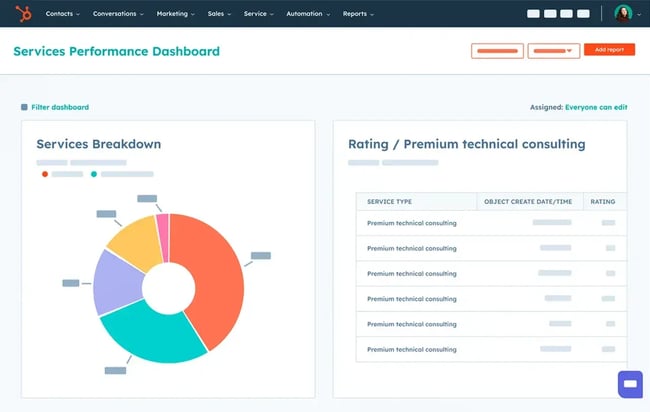
Tool tip: Check out HubSpot Service Hub. This suite of solutions includes reporting dashboards that make it simple to track CSAT, ticket volume, first-contact resolution, and other key metrics. Service Hub can also help automate support, route tickets to available reps, and provide self-service options.
2. Map the customer journey and identify friction points
For companies with an existing customer journey map, now is the time to revisit it. Companies should ask themselves, “Does this map identify with the customer journey as it stands right now, or is the journey map outdated?”
To build a new customer journey map, CX leaders should document all touchpoints that take place from the moment a lead converts to a customer. Journey mapping identifies friction points and opportunities in the customer lifecycle. Journey maps also consider stages, such as onboarding, first product interaction, product milestones, support, and renewals.
After the journey map is updated or created, the next step is to collect feedback from customers at each of the journey stages and analyze the data. The goal is to use the data to understand:
- Where do customers struggle or drop off?
- What recurring issues appear in support?
- What is customer sentiment at these stages (frustration, excitement, etc)
Then, prioritize the identified friction points by frequency, impact, and cost.
Tool tip: For teams looking to build a customer experience optimization program that scales, consider HubSpot Breeze AI. Customers can chat with an agent to get immediate service and support for routine queries, improving the customer experience.
HubSpot Breeze can also analyze tickets, chat/email conversations, and other customer interactions by pulling data from the tech stack. Breeze then quickly surfaces themes and insights that can be reviewed continuously to drive timely improvements.
3. Prioritize fixing the issues
Now that issues have been identified, it’s time to start addressing them at the root. Review the recurring issues and themes from the collected data and brainstorm permanent solutions that start at the process, product, or documentation level.
While it’s tempting to try to address everything at once, prioritize the high-impact journeys first. This includes those that drive high support volume, reduce customer satisfaction, impact churn or retention, or prevent customers from fully adopting products.
Companies should avoid creating temporary solutions that only address symptoms. Instead, look at the bigger picture to understand how to solve the issue as a whole. While this can sometimes feel easier said than done, collaborating with cross-functional teams can often lead to more holistic resolutions.
Common fixes include process changes, improving documentation, product updates (ex, UI changes), or updating training for customer-facing teams. Aim to solve for one major root cause at a time in order to track measurable results.
CX tip: Not sure which issue to start with? Creating a decision matrix can be a helpful exercise, as it removes any emotion from the process and allows you to weigh criteria for each issue differently. Even small teams can make a big impact by focusing on one journey at a time.
4. Build (or improve) self-service infrastructure
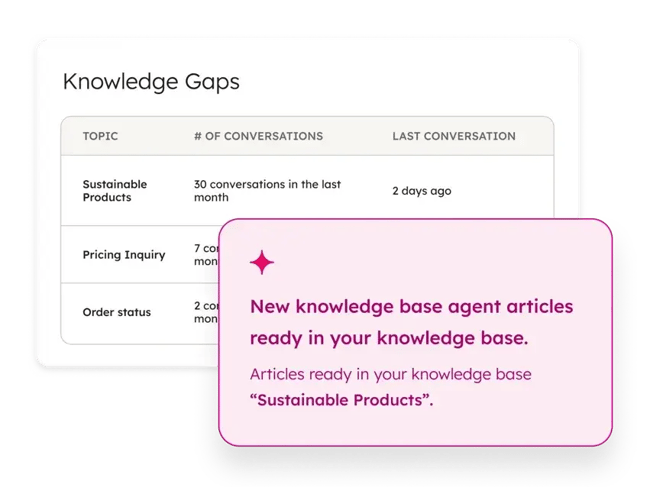
Once a priority matrix has been created to address the identified issues, building (or updating) self-service resources will be an action item. Tools like Hubspot’s Breeze can automatically suggest new articles from resolved tickets, helping scale the knowledge base content naturally.
Companies should also consider other methods of self-service offerings, like leveraging AI chatbots and AI Agents to help customers. With chatbots and agents, AI-powered orchestration enables personalized, proactive customer experiences at scale.
Customers overwhelmingly want self-service options, and they expect companies to provide them in a way that meets their needs. Determine what type of self-service offering would best address each friction point while ensuring that each offering meets the expectations of the customer. Teams should factor for availability, channel delivery, and effectiveness of the offering.
CX tip: I recommend incorporating proactive guidance into your self-service strategy. This encourages more advanced product adoption, which in turn makes your offering more “sticky” for customers. I’ve often been asked, “What does good look like?” or “Am I doing this right?”
Go beyond basic “how-to” documentation by creating content that helps customers discover additional value and how to use your offering according to best practices. By guiding them toward these insights, you strengthen engagement and long-term satisfaction.
Tool tip: Teams can use HubSpot’s Service Hub to give every request a ticket, an owner, and full context, instead of relying on chaotic email chains. HubSpot’s AI‑powered Customer Agent can instantly answer common questions 24/7, and Help Desk with Breeze gives teams quick access to member history and ticket summaries.
5. Collect customer feedback
Rather than treating it as a single step, customer feedback collection should be viewed as a continual, integrated process. Companies can employ multiple channels and methodologies to consistently gather and act upon customer input.
For the CX optimization process, customer feedback and voice of the customer (VoC) data are analyzed. Insights help reps identify goals, build the journey map, and see patterns. Once improvements have been launched as part of the CX Optimization process, companies should continue to gather feedback to gauge each action’s effectiveness.
Continuously capturing both quantitative metrics and qualitative feedback across key touchpoints ensures decisions are guided by real customers.
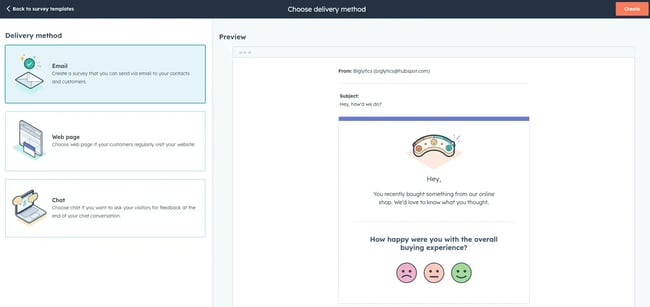
Tool tip: If you’re looking for a tool to help with VoC data collection, check out HubSpot’s customer feedback software tool. HubSpot’s offering integrates essential surveys (NPS, CSAT, CES) directly with the CRM to automatically link feedback to specific customer records. Teams benefits from immediate, personalized action and insight tracking.
6. Make CX Optimization a company-wide initiative
Don’t let CX optimization happen in silos. The insights, friction points, and issues that are uncovered will need to be shared across the organization to make foundational changes.
Internal teams can benefit from understanding the friction points and the planned resolution for each issue. Chances are, some cross-functional teams will want to weigh in and may even contribute to the potential solutions.
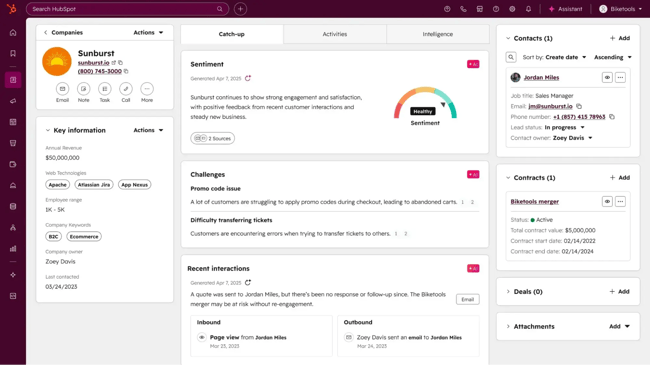
Fostering internal transparency around customer sentiment is crucial. Tools like HubSpot CRM can bring all customer interactions, feedback, and engagement data into one centralized platform. Then, every team works from the same source of truth.
HubSpot Smart CRM unifies customer data across marketing, sales, and service, simplifying the process of measuring the impact of CX initiatives. This enables organizations to build personalized customer experiences at scale, without making customer data siloed.
7. Measure progress and keep iterating
CX optimization programs are not a “set it and forget it” initiative. Instead, they require regular monitoring and iteration. Continuous improvement requires regular measurement, feedback loops, and governance. CX leaders should track the impact of implemented changes using the previously identified goals and metrics to determine progress.
Where needed, refine the deliverables or change directions. Create reporting dashboards specific to these optimized customer experience initiatives for easy tracking and insights. Teams can see analytics in Service Hub.
CX tip: Don’t be afraid to pivot quickly when the data and feedback warrant it. Check out the Agile Design methodology for CX, modeled from the agile design methodology for software development. The Agile CX methodology is defined as “[prioritizing] iterative processes and improvement, allowing for quick adjustments based on customer feedback and market trends.”
8. Leverage AI and automation to scale
PwC’s findings specifically noted that today’s customers find the human touch an incredibly important part of their journey with a company. This means customers want a speedy, frictionless experience, but they still want it to feel human-led.
CX leaders can leverage automation for mundane or time-consuming actions, keeping actions that require creativity or complexity in the hands of humans.
Chatbots are a great example of how to do this. Many AI chatbots can answer open-ended questions for customers, and many AI agents can even complete tasks for customers, like resetting a password or processing a refund. However, if the customer can’t reach a resolution within an automated interaction, a human support rep should jump in right away.
Look for areas where automation can reduce the mental load and remove friction for customers, allowing AI to enhance the customer experience.
CX tip: Your customers will often tell you the most frustrating or taxing parts of their experience with your company or product. I suggest analyzing that feedback specifically to identify themes that could benefit from automation or AI.
Once a CX optimization program has been built and launched, it will need to be measured and iterated upon. Keep reading to learn about key customer service optimization metrics worth tracking.
Customer service optimization metrics and reporting.
When building a customer service optimization program, it’s important to measure and report on the right customer experience metrics. Important metrics to track include:
- Customer Satisfaction Score (CSAT).
- Customer Effort Score (CES).
- Net Promoter Score (NPS).
- Customer churn/retention rate.
- First Contact Resolution (FCR).
- Self-service adoption/deflection rate.
1. Customer Satisfaction Score (CSAT)
CSAT, or Customer Satisfaction Score, measures how satisfied a customer is with a specific interaction, such as a support ticket, onboarding session, or purchase experience. It reflects immediate, transactional sentiment rather than long-term loyalty.
CSAT is typically collected through a post-interaction survey asking customers to rate their satisfaction (e.g., on a 1-5 or 1-10 scale). The score is reported as the percentage of customers who select the top satisfaction ratings.
2. Customer Effort Score (CES)
CES, or Customer Effort Score, measures how easy it was for a customer to complete a task or resolve an issue. It focuses on friction, not emotion, and is one of the strongest predictors of loyalty and repeat behavior.
To measure CES, customers are asked to rate how easy their experience was using a scaled question such as, “How easy was it to resolve your issue?” Results are tracked as an average score or percentage of low-effort responses.
3. Net Promoter Score (NPS)
NPS, or Net Promoter Score, measures overall customer loyalty and likelihood to recommend a brand to others. It reflects emotional connection, trust, and long-term relationship strength rather than single interactions.
To measure NPS, customers answer, “How likely are you to recommend us?” on a 0-10 scale. Responses are categorized into Promoters, Passives, and Detractors, and the score is calculated by subtracting the percentage of Detractors from Promoters.
4. Customer Churn/Retention Rate
Retention measures the percentage of customers who stay with your business over time, while churn measures those who leave. This is the most direct indicator of whether your experience is driving long-term business value.
Retention rate is calculated by dividing the number of customers who remain at the end of a period by those who started it. Churn rate is the inverse and is often tracked monthly or quarterly.
5. First Contact Resolution (FCR)
FCR, or First Contact Resolution, measures how often a customer’s issue is fully resolved in their first interaction without requiring follow-ups. It is a powerful indicator of both customer satisfaction and operational efficiency.
FCR is calculated by dividing the number of tickets resolved in one contact by the total resolved tickets. It is typically tracked through ticket status, reopen rates, and follow-up contacts.
6. Self-Service Adoption/Deflection Rate
This metric measures how often customers successfully resolve issues using self-service tools such as a knowledge base, chatbot, or help center without needing an agent. It reflects CX maturity, scalability, and cost efficiency.
Deflection rate is calculated by tracking the number of self-service sessions that do not lead to ticket creation, divided by total help-seeking sessions. Many teams also track knowledge base views versus ticket volume for validation.
Frequently Asked Questions About Customer Experience Optimization
How long does it take to see results from cx optimization?
The timeline for seeing results depends on the complexity of the program and the type of changes being implemented.
- Short-term improvements, such as reducing friction in support, can show measurable results in four to eight weeks.
- Medium-term results, such as improved customer effort and reduced churn, typically emerge over two to four months.
- Long-term results, including increased loyalty and referral impact, may take six to twelve months to fully materialize.
Do I need a dedicated CX team to get started?
No, businesses do not need a dedicated CX team to get started with a CX optimization program. Even small businesses and lean teams can build a scalable cx optimization program.
The key is to have clear ownership, defined goals, and a process for implementing changes.
Which journeys should I optimize first?
It’s best to focus first on the customer journeys that have the greatest impact on satisfaction, retention, and revenue. High-priority journeys often include onboarding, key support interactions, billing or renewal processes, and major product usage flows.
How do I align leadership and secure budget?
Start by clearly linking CX initiatives to measurable business outcomes such as retention, revenue growth, cost reduction, and customer loyalty. Use data from current customer feedback, ticket trends, and early wins to build a compelling case for investment.
Businesses may need to request budget for new tools or headcount in order to launch a CX optimization program. While small teams with a low volume of feedback might find success working across ad-hoc tools and spreadsheets, once the volume of feedback and program complexity begin to scale, it may be time to invest in a CX platform like HubSpot Service Hub.
CX optimization is worth the investment
When companies choose to invest in customer experience optimization, they prove their commitment to customer satisfaction. By leveraging feedback to enhance the customer journey at every touchpoint, businesses not only meet expectations but also create experiences that keep customers coming back.
For companies both large and small, having an integrated suite of tools like HubSpot makes launching a CX optimization program a breeze. HubSpot’s unified platform supports every stage of the customer journey — from analyzing sentiment and support trends in Service Hub to centralizing data in Smart CRM. Companies can make data-informed decisions and leverage tools like Breeze Agents to then improve the customer experience.
The companies that lead their industries today are the ones that listen closely to their customers and use those insights to shape better products, smoother journeys, and stronger relationships. In a market where consumers have more choice than ever, businesses that invest in CX optimization create experiences that truly stand out.
